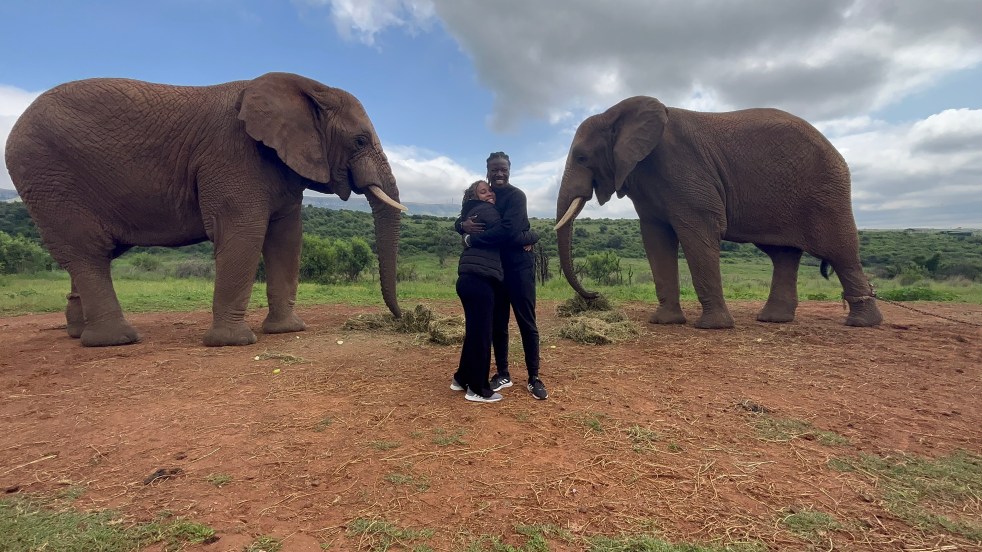
I was going to write a detailed post about my whole trip, but I no longer feel called to do this. One, it would take a long time. Two, I’m not sure anyone cares enough to read it all. And three, you can see highlights on my Instagram and achievements of the year post. At a glance, this is what my trip involved:
- Just under 2 weeks in South Africa (first 8 days in Cape Town, then 4 in Johannesburg)
- Kirstenbosch botanical gardens
- Penguins in Simon’s Town and Boulders Beach
- Hiked Cape Point and Cape of Good Hope
- Cable car to the top of Table Mountain then hiked down
- Robben’s Island prison where Nelson Mandela and other freedom fighters were wrongly imprisoned
- Aquarium
- Wine tasting at Beau Constantia vineyard
- Monkeys jumped on our heads at monkey park and the world of birds
- Safari drive in Johannesburg at African hills game reserve
- 90 min massage
- Elephant experience where I got to touch, feed, and be kissed by elephants
Now that the what I did part is over, I want to reflect on what it meant to me. Lingering on the details between the big moments. I could say that each experience was unique. I’d never done a lot of the things from this trip. However, that’s surface level. Boring.
Our South African trip was one of…contrasts. Contradictions and juxtaposition. One of confusion of emotion and sights. On the one hand, we had the greatest trip of our lives. We did and saw incredible things. Cape Town is beautiful. The wildlife and nature of Johannesburg are awe-inspiring and breathtaking. But we cannot ignore the decoration of homeless people sleeping under palm trees along the promenade, lulled to sleep under the scorching summer sun by the sea. And for the first time, they are not white homeless people. They are black. This may mean nothing to some, but it cut me deeply. It’s not often you see black homeless people in the UK. Seeing people who look like my family out on the street is gut-wrenching but more so, it creates a narrative of this place.
Try as you might, you can’t hide from the reality of Apartheid in SA. The street signs are in Dutch. All the homeless people are black. The townships, with the tin shacks, are full of black people only, who were forcefully removed from their homes to create whites-only neighbourhoods. And no, this isn’t a distant memory of the far past. Apartheid only ended in 1994 and of course, the country still bares the scars. Years upon years of trying to fix what was broken while people were still hurting. And apparently, to this day, there are still whites-only places in SA. There’s a whole community of white people who have their own laws and shops and schools and government within SA! How is that allowed? The tension between races is still there, with anger and hurt on both sides.
As a mixed-race woman, I felt stared at. I felt alone. I saw only three other mixed women while we were there, and I felt comforted by their presence. While my husband was treated like an African king returned home (he is a black Zimbabwean), I felt less than compared. Maybe it was my own perception, and not the truth of the situation, but even as a foreigner I felt the tension left by Apartheid and the colour of my skin was a cry of shame.
When we arrived in Cape Town, we were told about something completely unexpected: load shedding. Load shedding is South Africa’s answer to the overuse of electricity in the country. For hours throughout the day, the whole country has its electricity switched off (at least that’s what it seems, I’m sure some places or people are excluded from this). This meant being thrust into darkness, having no connection at all, for hours. Luckily, the hotel and lodge we stayed in had generators, so we didn’t have to suffer for long. But again, the residents of SA do have to, unless they can afford generators. We were in the museum and boom, darkness. We were in H&M and boom, darkness. People screamed, showing who the tourists were. It’s eerie. It’s wrong.
The constant backdrop of our Cape Town stay was these hooked-beak birds that roamed the promenade where we stayed at Sea Point. We found out the name while visiting Kirstenbosch botanical gardens. It was the hadeda bird, aptly named because it sounds like it’s laughing when it speaks. It became a running joke for us. The natural wildlife of Cape Town and Johannesburg made the trip all that more special. Baboons, though dangerous, running across the roads, hanging in parks, lurking in the brush. I spotted five horses on separate occasions while driving to the airport. Just chilling in parks and around the township houses. Ostrich, colourful birds, antelope, lizards, hydrax, and more.
Let me comment on that for a moment. The wildlife and natural landscape of South Africa is awe-inspiring and far from my norm. But so were the tin houses. The clear poverty of the people who had no other choices in life. Ripped from their homes, deemed less than, and made to wrestle with a still broken, corrupt system. I can’t remember the full story, but there are half-built roads found around Cape Town because the government started building without permission and people protested. Just dangerous, monstrous bridges. There is just the lingering, ugly concrete of yet more decisions made without any care for the people.
The most prominent natural monument in Cape Town is Table Mountain. I feel privileged to have reached its top, and even more so to have spent eight days with it watching over me. There’s something so godly and ethereal about misty mountains. I think wherever I settle later in life, I would feel blessed to see mountains every day. Reminded how small my problems are. While up in the mountains, we heard singing. We approached it, following this angelic melody, worried it may be a figment of our imagination. Maybe we were being lured into a fantasy land. But alas, through the mist, I spotted people standing on the side of the mountain in the distance, singing like a choir. Yes, for real! I couldn’t believe it. I wanted to cry, it was that magical. I was reminded of the beauty and power of people. The power of a collective voice.
Speaking of the beauty of people, we saw a group of boys playing basketball. No, not with a basketball and a hoop, like you’d expect. Instead, it was an ordinary ball and a makeshift hoop. They had cut out the bottom of a large plant pot and nailed the pot to a tall tree. There you have it, a basketball hoop! Absolute genius. We may cry and moan that we don’t have our fancy lattes, or the latest iPhone, but these boys made a game and were playing with pure joy with a plant pot and a ball. They didn’t moan (or maybe they did, but not for long) instead made something work with what they had. If only more of us had the brains and creativity to make things with our hands. If only we didn’t rely so heavily on the ease of things over here.
In 2018, my husband and I were in Rome during the World Cup. This year, we were in Cape Town. There’s something special about watching World Cup games abroad. You take international unity to a whole other level. People from all over the world, gather to watch two countries go head to head. And even if you don’t care about football, for some reason you care about this. You ooo and ahhh in unison. There’s something so special about that. I hope to always be abroad for World Cups; it’s become an accidental tradition of ours.
The last thing I’ll talk about from Cape Town is our trip to Robben Island. This is the island where the prison Nelson Mandela and other freedom fighters were kept. For decades. In poor, unjust, inhumane conditions. Black prisoners were given less food and fewer options than white ones. They were given thin, itchy blankets and slept on the floor.
Have you heard of Robert Sobukwe? I’d be surprised if you had. Apparently, his part in history is kept sort of secret. He was one of the high-profile prisoners and enemies of the state during Apartheid. He was the only prisoner to be kept in isolation with the dogs in the kennels. He had so much influence, that they had to create a law to keep him prisoner! The Sobukwe Clause allowed the South African government to extend and renew his period of confinement. Sobukwe raised awareness of Apartheid all over the world, was president of an anti-apartheid organisation, and convinced people not to carry their permits (the don pass booklet, I think it was called).
Prisoners were only allowed 2 visits a year, once every 6 months at the lowest level of imprisonment. This was Mandela. These visits were only 30 minutes long and were watched by guards. They were only able to speak in English or Africaans or not at all, too. So if you couldn’t, you sat in silence. Robben Island wasn’t just an island for prisoners. People with leprosy were sent there for isolation, waiting to die. Even in death, blacks and whites were separated, their graves divided by gender and race. South Africa has a long, sad history of divide, conquering, and violence. It’s astounding that so much beauty (in the hospitality and kindness of the people, and the natural landscape) remains.
At our lodge in Johannesburg, we experienced a luxury chalet. Like a 5-star apartment on a wild game reserve! We had a stone pool overlooking wildlife! A woman turned down our bed before we slept in it (I had no idea what this was when she asked me until she did it)! I’ve never been treated to such luxury.
The safari and pool session in Johannesburg was a needed break after some difficult events during the trip. We saw animals and laughed and chilled. Monkeys played on the trees by our lodge. The next day (our last) we did the elephant experience. This was one of the things I was looking forward to the most. I was worried something would happen to prevent me from doing it (like last time), but we did it. It was magical. I will remember it forever.
But again, contradictions. While it was amazing for me, it wasn’t so much for the elephants. They had to, like me, do things they probably didn’t want to do. Perform small tricks for treats. It’s just training like we do with our dogs, but they’re wild. Wild! They’re not for us to tame, right? And I couldn’t ignore the chain on their legs. Though wrapped in a soft material so it wouldn’t hurt them, it took me away from the magic of the moment and back to reality. In order for me to have this experience, they had to be chained up for my safety. They had to be trained. Though they said that in Asia the elephant handlers hurt the animals to tame them, but African handlers only bribe them with food, I have no idea of the reality of the elephants’ experience. We were unable to ask for permission to touch and take photos with them. They had no say. And that’s heartbreaking.
There is a lot I could talk about during my time in South Africa. We experienced a lot. It was the small details, not the picture-perfect moments, that made the trip what it was. Some details slip through the cracks, sadly. But I hope I’ll be reminded of these things time and again over the years. “Oh, remember in Cape Town when we…” those moments are worth living for. The stories we have to tell. The essence of a place that lingers with you wherever you go.
Though the trip was tough for me and full of a lot of contradictions and contrasts, it was beautiful and it was a solid reminder of what life is all about. I was simultaneously transported far from reality, witnessing fantastical moments of pure awe; while also being faced with a harsh reality, where I couldn’t close my eyes for it was all-consuming and now sits within me. I thank the universe for it all. And thank you to those who supported our marriage our way, and contributed to our being able to go.
Thank you. Thank you. Thank you.
Sincerely,
S. xx

 S. R. Crawford