I may have gotten complacent. Maybe thought years of therapy and self help books made me better at this stuff. Recognised my role in conflict. Healed old wounds. Expressed myself in a healthy manner. Maintained healthy relationships with appropriate boundaries and expectations.
Hmm, not quite.
Instead, this year has reminded me that the self work is never done. It’s not a journey to a destination. It’s the vehicle we’re driving in along the way. It’s a means of getting to the nebulous end. It’s an endless road, really, that only ends in death.
Dark, sorry!
But we can’t escape the dark. These behaviours or thoughts that we don’t like controlling us are our shadows. Wounds and experiences that left us operating in an unhealthy or harmful way in the present. It’s okay. It’s human. It’s normal. But we can, with time and love and grace for ourselves, work to live less in the dark. Or at the very least, acquaint ourselves with the shadows so that they puppeteer us less often.
How to start your shadow work:
Step One: Reflection
You first need to know what areas need work. Sit in silence and see what comes up. Journal dump all ideas, fears, worries, recent conflict in relationships, fixations of your mind, etc.
Step Two: Metrics
Different shadows will need different kinds of work. What does success or healing look like for each area of self-work?
For example: I would like to be able to set boundaries with loved ones without feeling guilty or letting them slide when not respected
Step Three: Chose one
Don’t overwhelm yourself by focusing on too much at once. Choose the most impactful. Which area of work will influence your mood, self-worth, success, happiness, relationships (etc.) the most? Which area may have a ripple effect on the other areas?
Step Four: Take action with support
You may need a counsellor or therapist to help you with these shadows. You will likely need a journal for working through these things and documenting your findings. Work through the four Ts:
- Theorise
- Test
- Talk
- Tackle
First, you will need to cultivate a clear theory, for example, “I react overly emotional in times of perceived conflict or difficulty”.
Then, you test the theory. This doesn’t mean starting an argument to see if it’s true! Instead, open up your journal or sit with the idea and go through past events. Can you name 5 examples of when this might have been your shadow at work?
Next, you talk about it. This doesn’t mean telling everyone you know that you have this difficulty! It means speaking to a trusted loved one or a therapist, or if that’s too hard, write about how it makes you feel in your journal. How it feels in your body. What thoughts surround it. How you wish you could handle things differently. Maybe you could even go for a walk and voice note yourself using your phone, as if you’re talking to someone else about it.
Lastly, once you’re very clear on this shadow or wound or behaviour that needs work, get to work! Make a plan and set your metrics for success, then take it step by step.
**NOTE: Work takes time! The point of this post is to remind us that self-work is a lifelong journey. We never stop. There won’t come a day when we are perfect and never make decisions or take action from a place of shadow.
My areas that still need work
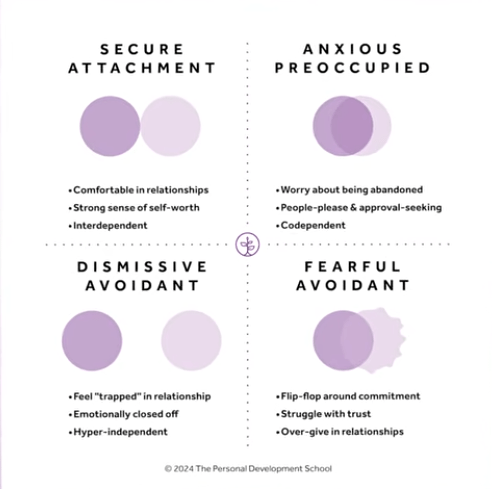
- My anxious attachment style / Anxious Preoccupied attachment or maybe even Fearful Avoidant (I need to research this some more, as it affects all my relationships not just my marriage)
- Emotional reactions instead thoughtful responses
- Catastrophising (thinking the worst case scenario or assuming the worst)
- Needing to be liked
- Needing to be seen a certain way and over explaining myself instead of accepting that I can’t control how people see me and it’s on them if they interpret me incorrectly (from my perspective)
- Having people in my life who fulfil different needs, instead of one or two who I expect to meet every need
- Taking things personally
- Letting go and moving on
- Need to be right or “win”
- Communicating feelings of upset fairly
- Co-dependency (manifesting as needing to fix things for others or fix them to what I perceive they should be or do)
- Productivity = self worth
Decide on what successful self-work looks like / metrics for success
I think there are three options for this:
Elimination
Modification
Acceptance
Every area of our life that needs work, we’re calling them shadows or wounds, will require a different level of work. Elimination is for the things we need to work on getting rid of so that we aren’t controlled by them anymore. Things that serve no purpose other than to hurt you or others.
On the other hand, some behaviours or thoughts or expressions of wounds may just need tweaking a little. They need a healthier outlet, not to be eliminated all together.
And then there are some things that we just need to accept and learn to move on from. This is likely to be events we can’t change. We must accept what happened, stop holding onto the narrative, and let it go (incredibly difficult for someone like me!).
So for mine listed above, I think the work looks like this:
- Modify
- Modify
- Eliminate
- Eliminate
- Eliminate
- Modify
- Eliminate
- Eliminate
- Eliminate
- Modify
- Eliminate
- Eliminate
Action steps
This is the hardest part and also the harder thing for me to explain because it will differ so significantly person to person. Instead, I will leave it to some other experts I’ve come across!
Podcasts to support your journey:
- Jay Shetty’s On Purpose podcast
- Radhi Shetty’s Really Good Cry podcast
- Oprah’s Super Soul
- The Mel Robbins Podcast
- Radical Responsibility podcast
- Happy Place by Fearne Cotton
- The School of Life
- Relationships Made Easy
- Growth Mindset Psychology: The Science of Self-Improvement
- How to Fail with Elizabeth Day
- On Attachment with Stephanie Rigg
- Sex with Emily (sex and intimacy advice)
- The Angry Therapist Podcast
- Optimal Relationships Daily – Dating, Marriage and Parenting
- Raising Good Humans
Books to support you for some potential shadow areas:
*A lot of these books may be available on library audio or the authors may speak about their work in interviews on podcasts and YouTube videos if accessing the books themselves doesn’t work for you*
- Finding and defining your shadows: The Gifts of Imperfection by Brene Brown & Rising Strong by Brene Brown
- Attachment style: Attached by Dr. Amir Levine and Rachel Heller & The New Attachment Theory by PhD Thais Gibson
- Trauma: What Happened to You by Oprah and Dr. Bruce Perry & It Didn’t Start with You by Mark Wolynn & The Body Keeps Score by Bessel van der Kolk
- How you were parented: The Book You Wish Your Parents Read by Philippa Perry & Adult Children of Emotionally Immature Parents by Lindsay C Gibson PsyD & Getting Over Your Parents by The School of Life
- Emotional literacy & regulation: Emotional Intelligence by Daniel Goleman & Atlas of the Heart by Brene Brown
- Friendships: Fighting for Our Friendships by Danielle B Jackson
- Victim mindset: Embracing Radical Responsibility by PhD Fleet Maull
- Opening up to others / vulnerability: Daring Greatly by Brene Brown
- People pleasing and need to be liked: The Courage to Be Disliked by Ichiro Kishimi & Fumitake Koga & Untamed by Glennon Doyle
- Relationships: The Book You Want Everyone You Love to Read by Philippa Perry
- Suicidal ideation: Reasons to Stay Alive by Matt Haig (please seek professional support for this one)
**NOTE: Simply reading the books or listening to the podcasts or YouTube videos won’t be enough to heal wounds or correct unhealthy thoughts and behaviours. If only it did!**
After consuming advice, we need to engage with the books and information we come across: highlight, underline, take notes, journal about it, follow the exercises some of these books or episodes may include. The advice needs to be made tangible.
- Ensure any good points made in these books or episodes are noted down somewhere in your own words so that you can easily refer back to them
- Note down three things you can do after reading a part of the book or listening to a podcast episode before moving on to the next section (BE ACTIVE NOT PASSIVE!)
- Take an action step from what you learned – just one for now!
- Review how that action went
- Take another, repeat
- Log how things went, what you may need to change, how you felt, if things went wrong ask why
- Keep experimenting (testing new beliefs or behaviours) in different scenarios to see what sticks and help yourself become more comfortable with a new action
- Give yourself patience and grace during this
For example, when testing your boundary-setting, try set a boundary with someone you are already comfortable with being vulnerable with. See how it makes you feel. How did they react? How did you react to their reaction? Were you clear and assertive enough? What might you do differently next time?
How to find a therapist or counsellor:
I’ve worked with NHS therapists and private counsellors on and off for years. I could not recommend it enough! You don’t need “huge trauma” (whatever that means) to see a therapist. It’s not weak or weird. It may feel uncomfortable at first, but that’s because it’s new and you’re in a vulnerable situation. But a licensed therapist or counsellor is trained to support vulnerable people. Your words are safe with them.
Advice for finding the right therapist:
- If you’re not getting along well with the therapist, change them! Don’t give up on therapy all together
- Give it a few sessions for it to feel normal
- Be specific about what you want from therapy, as this will determine who it’s best to go for
- Know the different types of therapy and what may be best for you
- Don’t be afraid to filter therapists by gender, race, age, nationality, or expertise – they need to serve you so your comfort is priority
Counselling Directory – Find a Counsellor Near You
How to find a therapist: BACP Therapist Directory
Again, this work is never done! Refer back to this and any of my other self-work posts for help along the journey. Know that it’s hard and you will make mistakes. You may, like me, also think you’ve done the work when that isn’t the case! Keep up the work with grace and compassion for yourself.
Sincerely,
S. xx


